Artificial intelligence has become impressively fluent, but fluency alone does not guarantee correctness. Retrieval-Augmented Generation, or RAG, improves AI accuracy by connecting a language model to trusted external data sources so it can generate answers grounded in evidence rather than relying only on what it learned during training. GraphRAG takes this idea further by using knowledge graphs and relationship-aware retrieval to handle more complex, connected information.
What RAG Is
RAG is a system design that combines two steps: retrieval and generation. First, the model retrieves relevant information from sources such as documents, databases, or knowledge bases; then it uses that retrieved context to produce a response. This matters because a standard language model can only guess from its training patterns, while RAG gives it fresh, query-specific evidence to work from.
Think of it like asking a smart assistant who also has access to a library. Instead of answering from memory alone, the assistant checks the right books before speaking, which makes the final answer more reliable.
Why RAG Improves Accuracy
RAG improves accuracy because it anchors generated responses in real source material. When the model receives retrieved passages in the prompt, it can align its output with actual facts, terminology, and context from the source documents. This is especially valuable for time-sensitive or domain-specific content, where model memory may be outdated or incomplete.
RAG also helps the system stay on topic. Because retrieval narrows the context to the most relevant documents, the model is less likely to drift into vague or unrelated answers. In enterprise settings, this can support better customer support, technical documentation, internal search, and decision-making workflows.
How RAG Reduces Hallucinations
Hallucinations happen when a model confidently generates information that is false, unsupported, or invented. RAG reduces that risk by limiting dependence on the model’s internal memory and forcing it to answer from retrieved evidence. In other words, the model is less free to improvise because it is being fed trusted context at inference time.
This does not eliminate hallucinations completely, but it lowers them significantly when the retrieval layer is well-designed and the source data is accurate. If the retrieval system pulls poor, outdated, or irrelevant documents, the model can still produce bad outputs, so the quality of the knowledge base matters as much as the model itself.
What GraphRAG Adds
GraphRAG extends traditional RAG by using graph-structured data, such as knowledge graphs, instead of relying only on text similarity search. A graph represents entities as nodes and relationships as edges, making it easier to capture how ideas, people, events, or concepts are connected. This is useful when the answer depends on relationships, not just keyword matching or semantic similarity.
GraphRAG can also find communities or clusters of related information and summarize them before answering, which helps when the source material is fragmented across many documents. That makes it especially strong for complex domains such as research, legal knowledge, biomedical data, and large enterprise knowledge bases.
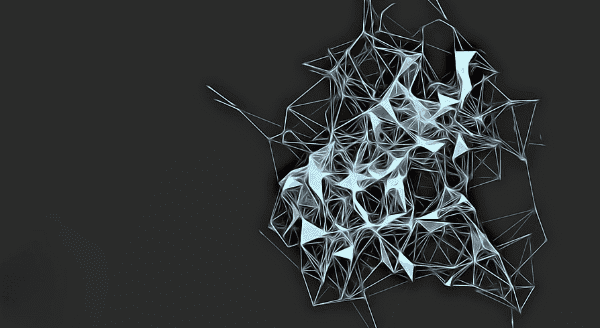
A Knowledge Graph maps data not just as text, but as a network of relationships (Nodes and Edges).
- Nodes are entities (e.g., Company A, Microchip B, Factory C).
- Edges are the relationships between them (e.g., Company A buys Microchip B, which is manufactured at Factory C).
RAG vs GraphRAG
| Aspect | RAG | GraphRAG |
|---|---|---|
| Retrieval style | Usually semantic search over text chunks | Retrieval over graph relationships and connected entities |
| Best for | Straightforward question answering and document lookup | Complex, relationship-heavy knowledge and multi-hop reasoning |
| Strength | Simple, fast, practical to deploy | Better at structured context and connected facts |
| Limitation | Can miss deeper relationships across documents | More complex to build and maintain |
In practice, many teams combine both approaches. A hybrid setup can use vector search for broad retrieval and graph retrieval for deeper contextual understanding.
Why GraphRAG is a Game-Changer for the Enterprise
By connecting an LLM to a Knowledge Graph, GraphRAG gives the AI a structural understanding of your entire business ecosystem. This unlocks a new tier of accuracy and capability:
- Connecting the Dots Across Silos: GraphRAG can traverse relationships to answer highly complex, multi-hop questions. It can trace a supply chain disruption through your product lines directly to the specific revenue streams at risk.
- Global Context: Standard RAG is “local”—it finds a few relevant paragraphs. GraphRAG provides “global” context. It can summarize sweeping trends across thousands of documents because it understands how all the entities within those documents relate to one another.
- Further Reducing Hallucinations: By enforcing strict relational logic, GraphRAG prevents the AI from making false associations. The LLM can only connect concepts if a documented relationship (an Edge) exists in the Knowledge Graph.
Why Trusted Data Sources Matter
RAG is only as good as the sources it retrieves from. If the system connects to verified internal documentation, curated databases, or authoritative external sources, it can produce far more dependable answers. But if the source material is messy, outdated, or inconsistent, the output quality will suffer even with a strong model.
That is why successful RAG systems usually include source filtering, ranking, reranking, and sometimes human review for high-stakes use cases. Strong governance around data quality is what turns RAG from a clever demo into a dependable AI tool.
Real Business Value
For businesses, RAG is valuable because it improves trust, reduces factual errors, and makes AI responses more explainable. Users can trace answers back to source documents, which is important in regulated or high-risk environments. This is one of the main reasons RAG has become a standard pattern in enterprise AI systems.seo.
GraphRAG adds even more value when organizations need to reason over complex relationships across large knowledge bases. It can uncover context that traditional retrieval might overlook, helping teams generate more complete and better-grounded responses.
Growth rarely feels like progress in the moment—it often feels like confusion, resistance, and starting over. Keep going anyway!! – K
“Disziplin bedeutet, sich immer wieder für das zu entscheiden, was man am meisten will – statt für das, was man gerade will, selbst wenn niemand zusieht!!“ – K
” Parfois, le plus petit pas dans la bonne direction est le plus grand progrès de ta journée!! ” – K